
Becoming a cat owner
Owning a cat can bring you and your family joy and companionship, but also many years of responsibility. Cats are active, intelligent, and longlived, and they require continued care and attention.

First considerations
Before making the decision to buy or adopt a cat, think carefully about how he will fit into your lifestyle. Bear in mind, too, that your responsibilities may be long term— a cat can live for more than 20 years.Could you give a cat daily attention? Most cats are relatively independent but some dislike
being left alone all day. Never leave a cat unattended for more than
24 hours; in an emergency, make sure that someone is able to look in on him. If you regularly stay away from home, a cat may not be right for you.
Is a cat suitable for the whole family? A cat that was not raised with young children will likely find living with them stressful; and if family members suffer from allergies or have restricted vision or mobility, a cat around the house is a potential hazard.
Do you want a kitten or an adult cat? Kittens need extra care and supervision, so be realistic about how much time you can allow for such things as litter-tray training and feeding up to four times a day. If you take on an adult cat, his previous experiences will influence how well he fits into your home. For example, a cat that is not used to children could find living with
them stressful. (Rescue centersthat rehome adult cats do their best to avoid such mismatches, Will your cat live indoors or outdoors? Keeping a cat inside is generally safer but few homes can provide all the stimulation that most cats require; adult cats that have always had access to the outside may not adapt well to an indoor lifestyle. Cats are hunters,
so if your cat goes outside you must accept that he might bring home prey. In the house, a cat inevitably sheds hairs everywhere and may scratch the furniture.
Would you prefer a quiet cat or a lively one? If you choose a pedigree, breed can indicate a cat’s likely temperament, but a random-bred cat is more of an unknown quantity. In both cases, individual personality can be influenced by early life experiences and the parent cats’ temperaments.
↚
Do you want a male or female cat?
Generally, neutered cats show no differences in behavior and temperament. Unneutered toms may roam and spray urine, while in-heat females may be restless.Essentials of cat
care Cats require a surprisingly large number of resources, and they can be expensive, so be sure thatyou can afford life-long care. Basic costs include buying food, bowls, beds, litter trays and/or a cat flap,
a cat carrier, grooming equipment, veterinary care, microchipping, and insurance.
As well as your cat’s physical requirements, also consider his need for mental stimulation. Cats can quickly become bored,
especially if they don’t go outside regularly, and this can lead to destructive behaviors. There is a wide variety of cat toys and
scratching posts available, but
taking time to interact with your
cat is just as important as providing him with playthings. He will need plenty of stimulation in the form of cuddles and games.
Cats need regular grooming and may need the occasional bath. For a longhaired cat, daily grooming (see pp.32–3), taking up to half an hour, is essential. Shorthaired cats
are far less time-consuming but they need brushing or combing at least once a week.
From time to time you may have to arrange for cat care. This can incur considerable expense either for boarding fees if your pet stays in a cattery or for paying a professional cat-sitter.
You are morally, and in many countries also legally, responsible for your cat’s welfare. Essential care includes giving your cat a safe home that enables him to perform normal cat behavior, suitable food and clean water, preventive health care and veterinary treatment when necessary, and protection from unnecessary suffering.
↚
Finding the right cat
Once you have decided that you are ready for the responsibility of being a cat owner, your search for the ideal pet begins. There are plenty of options, but you need to choose carefully to be sure of a happy outcome.
Where to look for a cat Registered breeders are the most reliable people to approach if you are looking for a pedigree cat For a non-pedigree cat, try rescue centers, your vet, or friends and neighbors that you know well. Be wary of buying a kitten or cat through a classified advertisement, especially one that also advertises a selection of other pets. The reality behind these offers may be animals that are reared in substandard conditions
that leave them unprotected against diseases. For the same reason, it is best not to buy kittens from a pet shop. Although many pet shops are highly reputable, some may acquire
their stock from dubious sources.
↚
Visiting a breeder
Make an appointment with your chosen breeder to view a litter, and arrive armed with a list of points to look out for and questions to ask. If you are a first-time owner, do some homework in anticipation of the visit—both on the particular breed you have come to look at
and on cat care in general. Good breeders want their kittens to go to responsible owners, so expect to have to answer questions as well as ask them. You should be satisfied that the kittens are being kept in a clean, uncrowded, homely environment. It is also important to see them with their mother and siblings. Apart from being poor practice to remove young kittens from their family, you cannot judge their behavior well if they are presented to you separately. you will find it difficult, if not impossible, to make up for lost time once you get your kitten home. Your chosen kitten should appear alert and active, with a healthy coat, bright eyes with no signs of discharge, and clean ears. Do not allow yourself to fall for a kitten simply because it looks in need of extra love. A kitten that is lagging behind its siblings may have health problems. Ask if the kitten has been screened for any genetic disorders common to the breed, and check that it has been vaccinated and wormed, or that it will have been by the time you take it home. Also enquire if the breeder is prepared to provide any after- purchase support or will take back the kitten should serious defects or problems arise. Pedigrees are expensive, but breeders sometimes offer kittens at a lower price because they are not “show quality.†However, even without symmetrical markings such as a bereavement or a relocation abroad, and a cat that has already had one loving home is likely to settle well into another.
The first step toward adoption is a home visit from a member of the shelter's staff (see box below). Once the shelter introduces you to some cats, they will tell you as much as possible about each cat's background and personality, and whether there are any health issues to consider. They can also give advice on cat care, including neutering, and offer back-up
support following an adoption. and internal parasites. If an adoption is agreed, you will be asked to pay a fee to help cover these expenses.
↚
Adopting a stray
Some people are chosen by their cat. A stray that hangs around can easily work its way into family affections, but before offering your visitor a permanent home, make sure that it really is a stray: many cats lead double lives. Make every effort to trace a possible owner by looking for local “cat missing†notices, posting notices yourself, or perfect conformation (breed characteristics), these usually make beautiful and lovable pets. All cats taken into shelters are routinely given a health check, vaccinated, and treated for fleas speaking to neighbors, or asking a vet to check whether the cat is microchipped .↚
Choosing a cat breed
There is a bewildering variety of shapes and sizes, colors, and coat types to choose from if you opt for a pedigree cat. However much looks appeal, you should consider a breed’s personality and needs before coming to a decision.
Do your research
Most people fall in love with a particular breed of cat because of its looks, but there are other important points to consider. Different breeds have distinct characteristics and varying requirements in terms of daily care, companionship, space to roam, and mental stimulation. You cannot have a happy cat if your lifestyle is not compatible with the breed’s temperament. And you will not be a happy owner if your pet is a noisy and hyperactive mischief-maker when you wanted a peaceable lap cat. The advantage of having a pedigree cat is that you can find out beforehand what you could be letting yourself in for. Do some research in advance—breed websites are often an excellent source of information. If possible, visit a cat show on a fact-finding mission, but be prepared to find all the breeds you lookat equally appealing.
↚
- Maine Coon

breeds, the Maine Coon is a gentle giant with a playful nature. The shaggy, semi-longhaired coat changes seasonally; be prepared for heavy shedding of the thick undercoat in warmer weather.
↚
- Persian
 Sweet-tempered and home-loving, a Persian
likes to take life quietly. Daily grooming is essential to prevent the long coat from tangling or matting. The Golden Persian shown here is just one of the many color variations available.
↚
- Exotic Shorthair
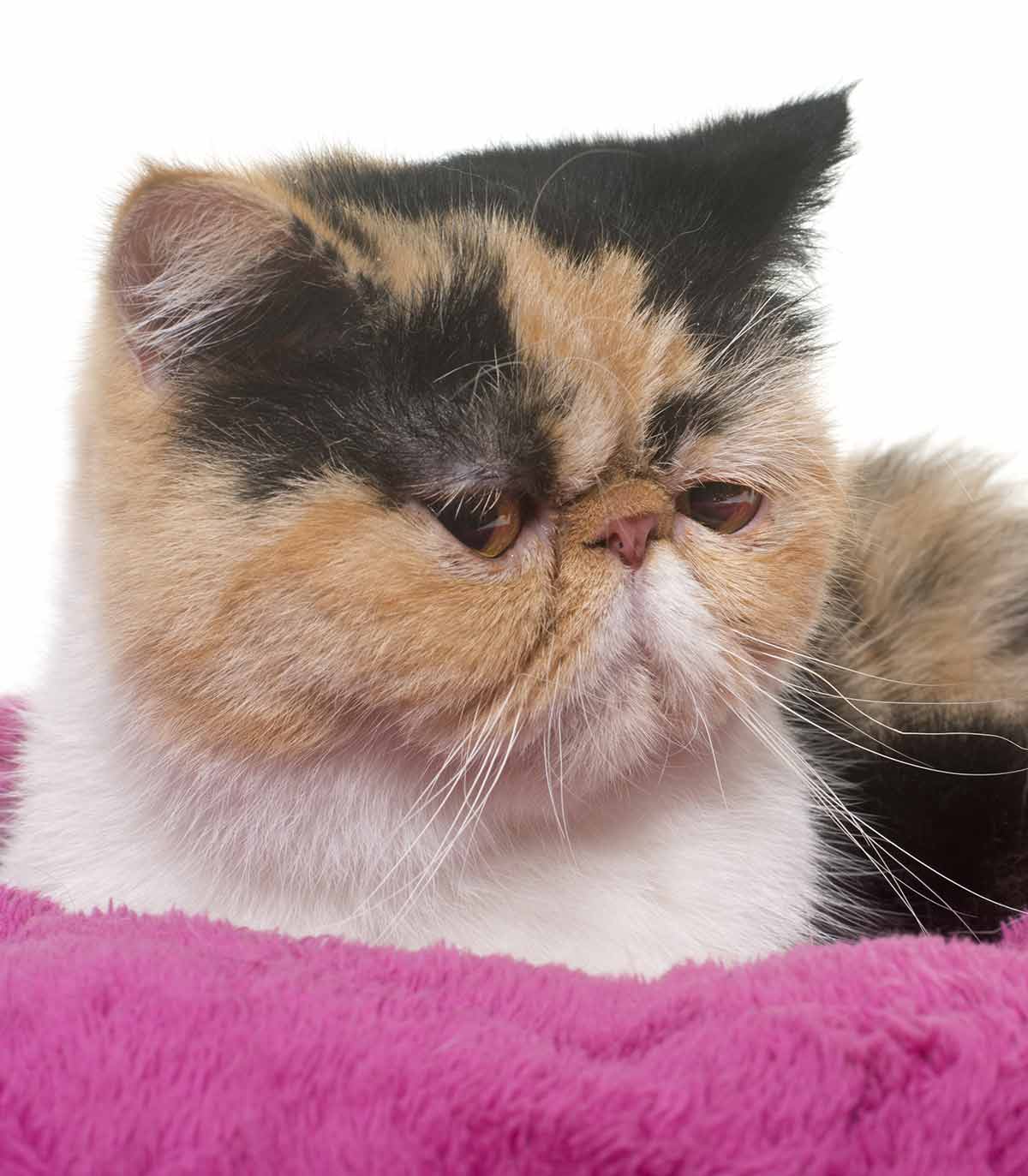 A shorter-coated version of the Persian, the
Exotic has the same round-faced appeal and placid temperament of its cousin, but needs
far less grooming. Content to spend life indoors, it makes a good pet for flat-dwellers.
↚
- Siamese
 There is never a dull moment with a Siamese in the house. Noisy, mischievous, and always on the go, this cat expects a lot of attention, which it repays with devoted attachment to its owner.
↚
- Russian Blue

This lithe and leggy breed
with a smoky, plush coat has become extremely popular over the last century. Russian Blues are calm, easy to live with, and very affectionate
toward their owner, although a little reserved with strangers.
